According to Canalys Chief Analyst Jay McBain, 51% of B2B companies say cloud marketplaces will be an important way to sell to customers in 2025. But as marketplaces mature from simple product catalogs to complex digital ecosystems, the gap between those who scale and those who stall is growing fast.
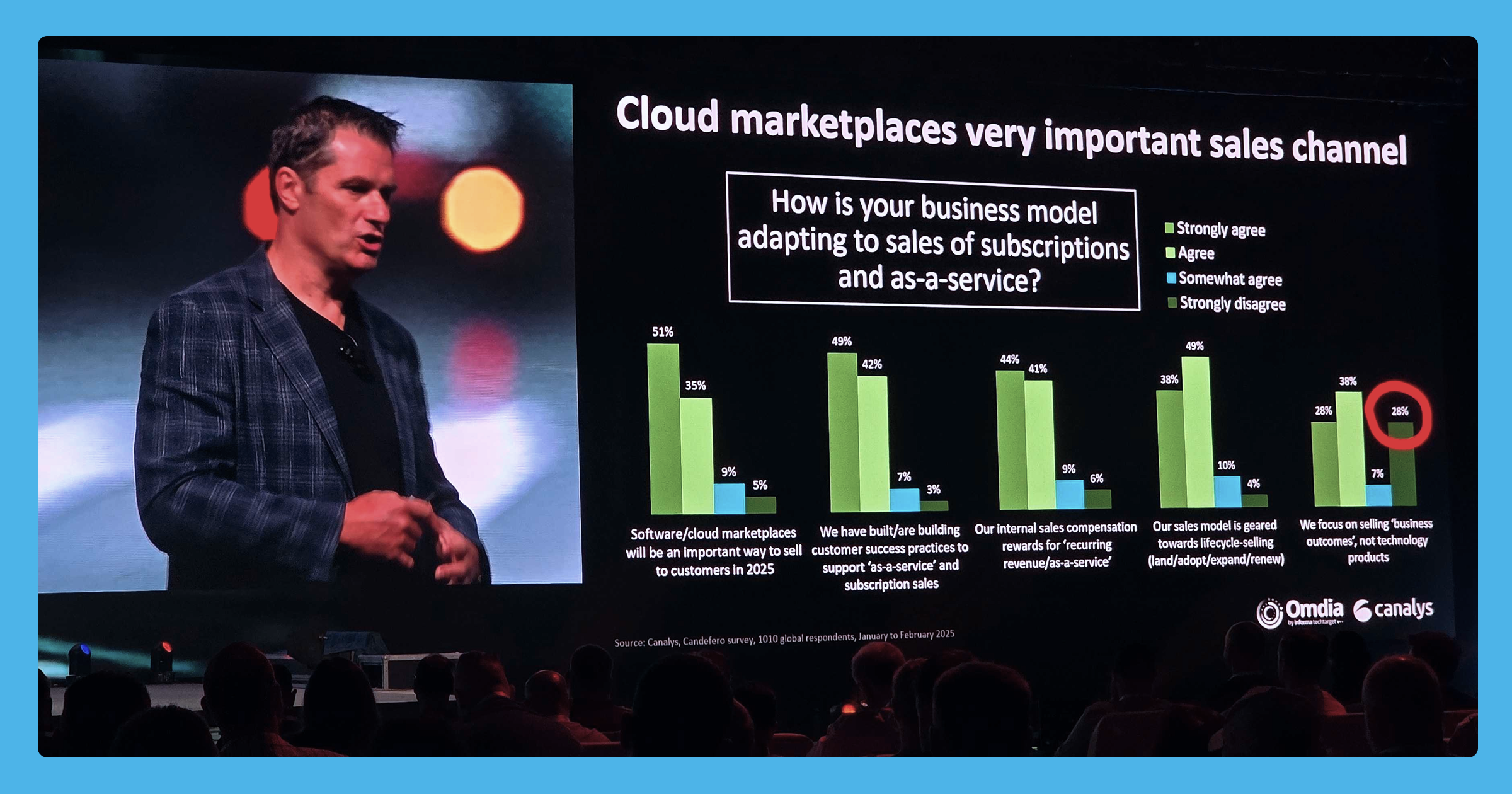
Source: Canalys & Omdia, based on a global survey of 1,010 respondents (Feb 2025). Slide presented by Jay McBain at Beyond 2025
In our latest LinkedIn Live panel, we explored what sets successful marketplaces apart — with insights from industry veterans Michael Frisby (former Infinigate Cloud, Microsoft, and Cobweb) and Sebastiaan Heukels (ex-CloudBlue, Parallels, and Ingram Micro, now Solution Architect at Devtech).
Here are four key themes shaping the next generation of B2B marketplaces — and why they matter now more than ever.
1. From Product Catalogs to Personalized Solutions
Modern buyers don’t want to browse endless product lists — they want curated solutions that solve real problems. That’s why personalization and bundling are emerging as strategic advantages for cloud marketplaces.
Buyers expect marketplaces to:
- Recommend solutions based on need
- Offer personalized pricing
- Enable multi-party offers that deliver real business outcomes
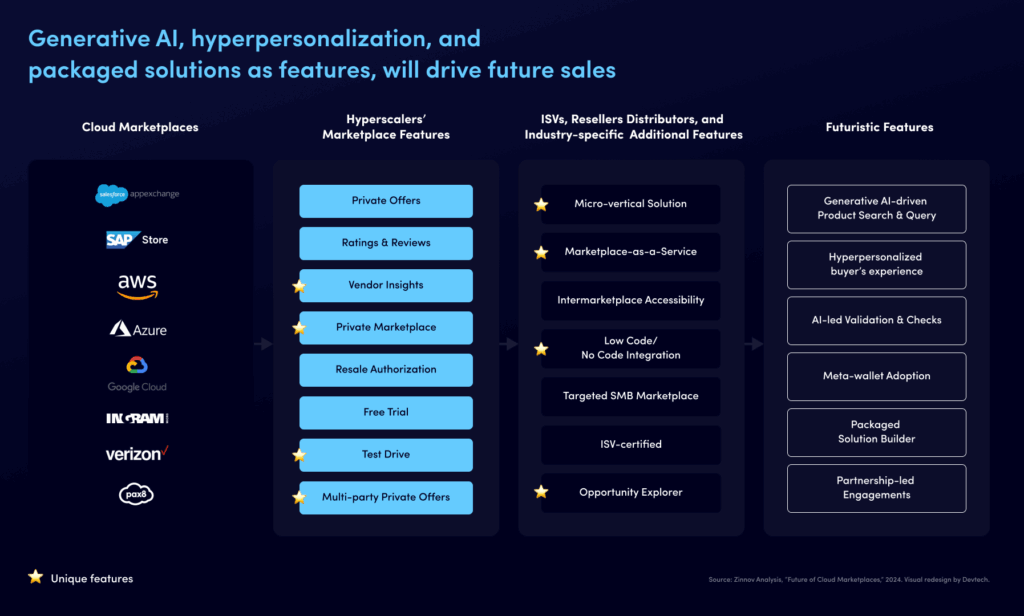
To meet these expectations, leading marketplaces are evolving rapidly. The chart below shows how hyperscalers, ISVs, and distributors are shifting their feature sets toward personalization, bundled solutions, and AI-driven buyer experiences.
And it’s not just about selling — it’s about reducing friction across the customer journey. AI-powered agents, as discussed in the panel, may soon assist in not just search, but AI assisted procurement, offering tailored product recommendations based on user profiles and past behavior.
This shift is also affecting who engages with marketplaces. While enterprises have led the way, panelists noted a growing uptick in adoption among corporate and upper SMBs — especially those seeking to simplify procurement across business units.
2. Operational Readiness Is the New Differentiator
Closing the sale is only the beginning. In today’s marketplace environment, growth is increasingly determined by what happens after the transaction — how fast you can deliver, how easy it is to onboard, and how well you retain.
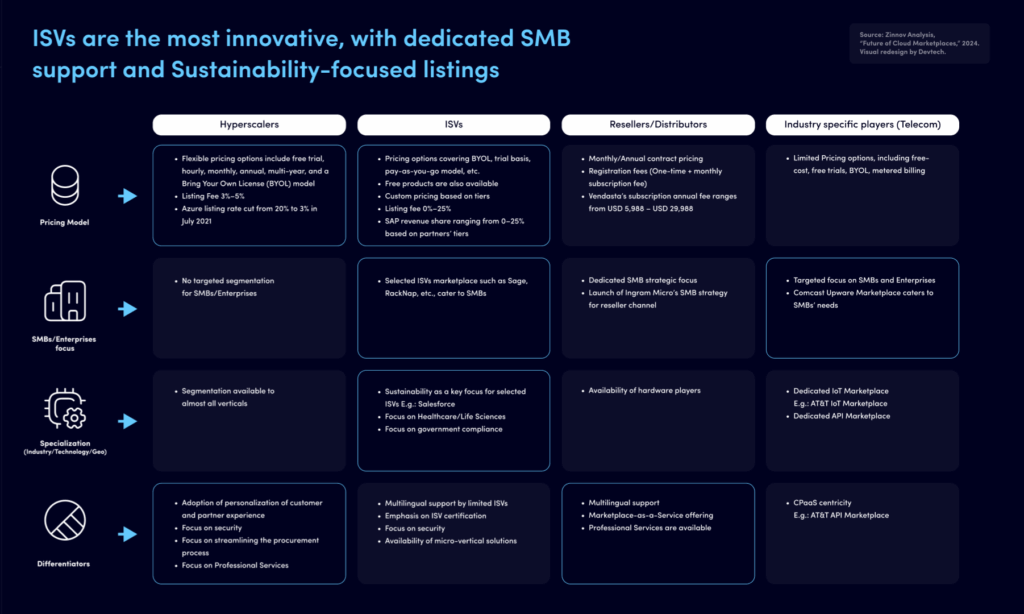
How do different marketplace operators compare when it comes to SMB support, automation, and specialization?
The chart below, based on Zinnov’s research, highlights how different types of marketplace operators — from hyperscalers to ISVs — stack up on personalization, onboarding, and operational maturity. ISVs, in particular, are leading the charge in multilingual support and sustainability-focused listings.
Many marketplaces lose customers post-purchase — not due to product value, but because activation is too slow or clunky. As Sebastiaan put it: “If they’re not activating it… that’s a sure way for churn.”
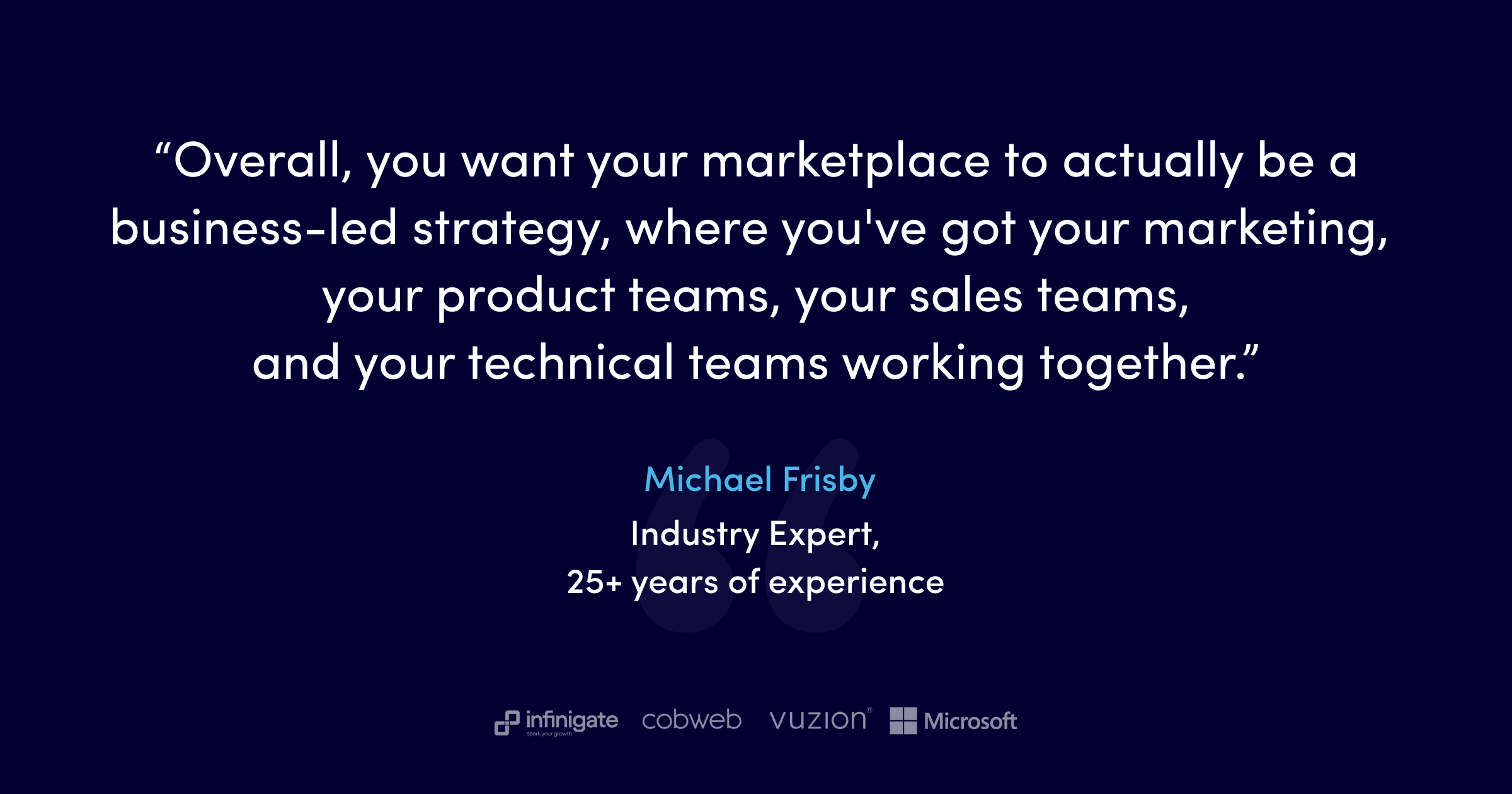
Operational excellence goes far beyond technical integration. It’s a cross-functional mandate, and one that must be business-led — not just owned by IT, according to Michael.
He also called out the importance of data in shaping marketplace strategy:
- How are buyers searching?
- Which product combinations attract the most attention?
- What are customers doing between registration and activation?
In other words, operational readiness means more than efficiency — it means insight, adaptability, and end-to-end experience design.
Here’s what high-performing platforms do differently:
- They adapt to vendor readiness. Even when vendors don’t support full automation, leading marketplaces create a seamless customer experience by orchestrating manual steps behind the scenes.
- They make operations a competitive advantage. Provisioning and billing aren’t treated as backend chores — they’re optimized as critical moments that shape customer trust and satisfaction.
- They align from the inside out. GTM, product, and operations teams share a clear understanding of why the marketplace exists — and what success looks like.
3. Trust Is Built in the Billing Experience
While marketplaces invest heavily in sales and marketing, one of the most overlooked churn triggers sits quietly at the end of the process: billing.
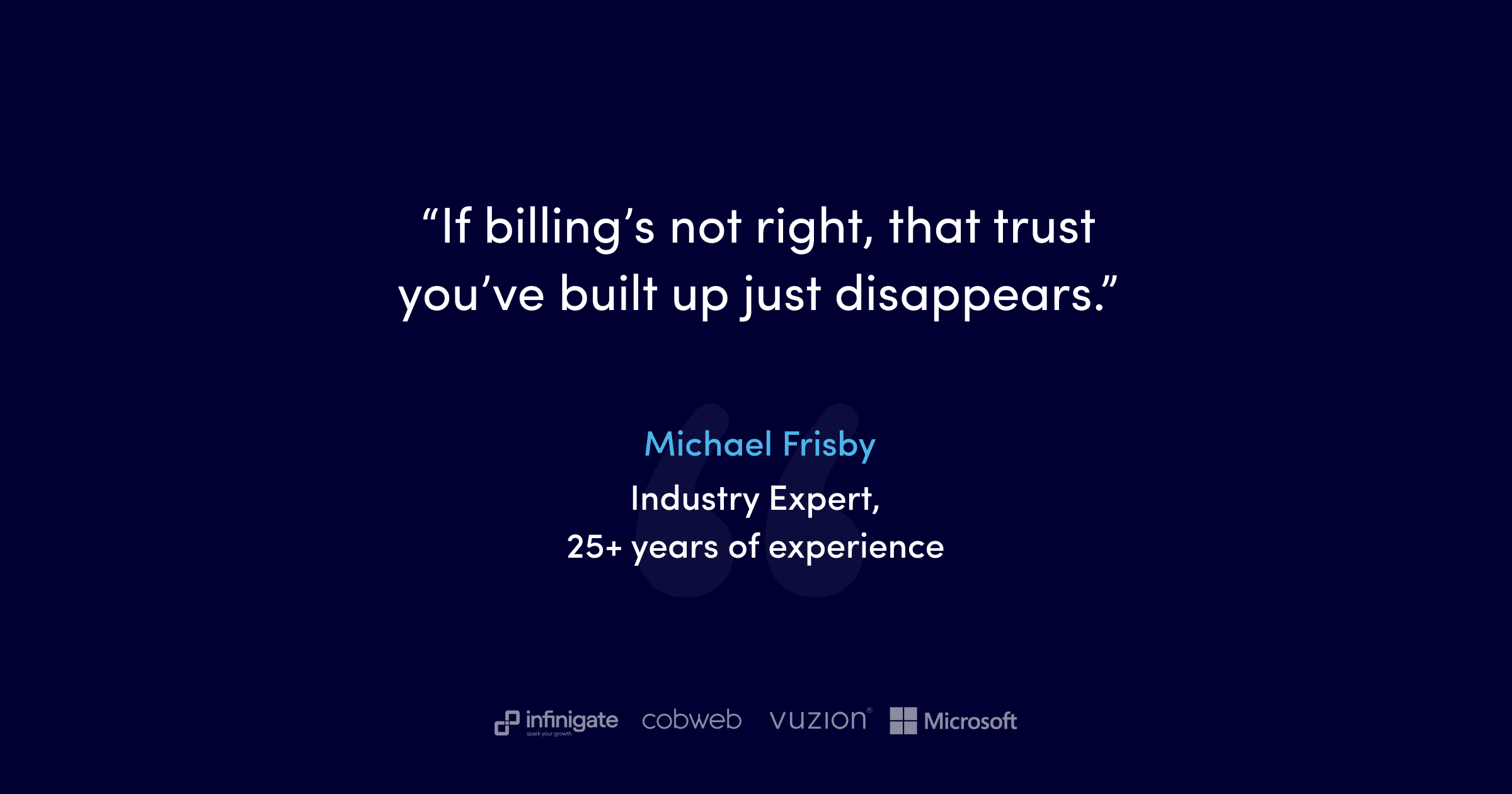
Common issues like delayed invoices, confusing charges, or inconsistent formats can undo months of sales and support work. Worse, they make customers question the entire buying experience.
Frisby emphasized that billing should be treated as a first-class citizen in the customer journey — not a back-office afterthought. Marketplaces that invest in transparent, accurate, and timely invoicing are better equipped to retain customers and scale confidently.
4. Looking Ahead: AI Will Power the Next Wave of Marketplace Growth
While many marketplaces are still solving for onboarding and provisioning, the next horizon is intelligence.
Panelists highlighted the potential of AI not just for search, but for:
- AI-assisted procurement based on customer profiles
- Predictive bundling based on buying intent
- Automated provisioning across vendors
- “White glove” orchestration at scale
This isn’t about futuristic hype. It’s about using AI and automation to make personalization scalable, and to build stickier, more intuitive B2B experiences.
Sebastiaan Heukels discussed the potential for AI agents to eventually orchestrate bundles and guide customers from purchase to activation in a seamless, scalable way — though the industry isn’t quite there yet.
The opportunity? Becoming more than a place to buy — becoming a platform to succeed.
Final Thought
B2B marketplaces are entering a new era — one defined by solutions, speed, trust, and intelligence. The leaders of tomorrow aren’t just building platforms. They’re building ecosystems that customers want to stay in.